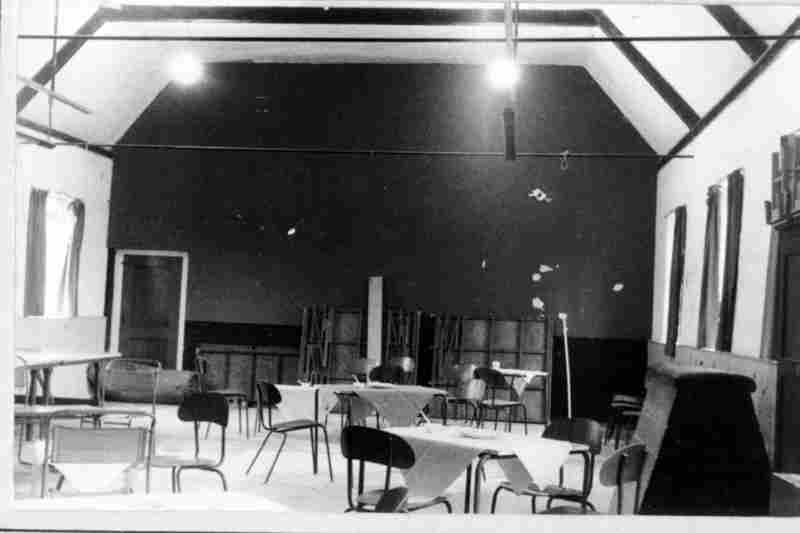
It’s not easy to find out how and when Sunday Schools as we know them began. What is clear, though, is that as long ago as the mid 1700s, British innovators began to teach poor working children to read and write on their only free day, Sunday. “Robert Raikes (1735-1811) is traditionally credited as pioneering Sunday Schools … 'in fact teaching Bible reading and basic skills on a Sunday was an established activity in a number of eighteenth century Puritan and evangelical congregations'. … The idea of the Sunday School caught the imagination of a number involved in evangelical churches and groupings.” (http://www.infed.org/walking/wa-raikes.htm)
Here are some random examples from a quick internet search:
“There are places of worship in the parish for Baptists, independents, the primitive, Wesleyan, and new connexion of methodists, and the Roman Catholics - all of which have Sunday schools attached. There are, besides, a national school, and a free grammar school for a limited number of boys. [From: Pigot & Co's 1841 Directory of Staffordshire]” (http://www.thepotteries.org/church/history_burslem.htm)
“In the late nineteenth century when the Rector started to take up residence, a Sunday school was begun.” (From a history of St. .Mary’s Church, Hardwick, at http://www.hardwick-cambs.org.uk/church/history.htm)
“The first Pastor of the Chapel was the Rev. Joseph Walker, who was appointed in 1797. In 1798 he drew up rules and articles for the conduct of the Chapel and its members. In the same year Rev. Walker founded a Sunday School.” (From a history of Peppard Congregational Church, Henley-on-Thames, at http://www.alan.thomas30.btinternet.co.uk/Church_History/church_history.html)
“In 1808 the first church was built on that site and served a thriving cause until 1870. Part of the work of this fellowship was concerned with running a large and flourishing Sunday School. In those far off days it was customary for the Sunday School to organise classes in reading on other days of the week too and so it was that the church extended their grounds westward by buying a bit of land from Messrs. T. & E. Ricketts. In 1858 a schoolroom to be used for both Sunday School and day school was built.” (From a history of Eastington Methodist Church at http://www.pikelock.co.uk/emchurch/history.html)
“Mr. John Thompson started a Sunday school in his own house, in the High Street, Wetherby on Sunday 23rd August 1833 … at a later date the Sunday school was held on the Church premises … at one time as many as 230 children regularly attended the Sunday School. The Sunday school met at 9:30am and again at 2:00pm every Sunday. The morning session was usually in the form of a bible study, and then the children would proceed into Chapel for the morning service. After many years, they were permitted to leave just before the sermon.” (From a history of Wetherby Methodist Church at http://www.wetherbymethodist.org.uk/history/index.html.)
That last quotation is telling, as it shows how, over time, Sunday school evolved from rudimentary education of children to a way for churches to teach children (and adults) about the Bible and denominational beliefs through standardised lessons.
Perhaps this is speculation but …
What if, by creating separate classes for children at the same time as adult worship, the churches (unknowingly) began to create a culture that expected adults and children to be separated?
What if the creation of Sunday Schools led to children no longer being welcomed or accommodated in ‘adult’ church?
What if, as a result of the children no longer being present, adult worship evolved into something
much more cerebral and ‘wordy’ than it had been?
What if we adults have become so ‘comfortable’ with a form of worship that excludes children that we can’t imagine them worshipping with us, or us worshipping with them?
What if we all scrapped our Sunday Schools and learned to worship together?
Monday, March 26, 2007

‘Child-friendly’ Churches?
“In a small local restaurant in Bologna my younger daughter noticed the wide age-range of the other diners – some seven decades must have separated the oldest and the youngest. Two young couples occupied a neighbouring table; at another there was a family celebration. Of course, you can see several generations of one family eating out in Britain, too, sometimes in the same restaurant as young couples, but what was different was that all of them were eating the same food. The words ‘child-friendly’ were nowhere to be seen.’
So begins an article by Anne Karpf in Saturday’s Guardian (24/3/07). And it got my mind working overtime about the way we feed children spiritually in our churches. We separate them from the adults, reject them from the main worship event, in order to teach them sanitised Bible stories and get them colouring, cutting and gluing. We offer them a supposedly ‘child-friendly’ experience of church. But what if our child-friendly Sunday Schools (or whatever we call them) are, as Karpf suggests, just “a euphemism for unhealthy ... reconstituted gunk.”
In Western societies (and in Western churches, I suggest) we have “cut children off from the blood supply of adult culture and immured them in a ghetto of children.” We think that we’re doing them a favour, looking out for their interests. We think they will be bored, unstimulated, if we offer them the same menu we give the adults in church. (And perhaps they would be – but then perhaps some of the adults are, too!) But then, when the children are in church for some special service or event, we complain that they don’t know how to behave, that “they don’t know how to get on with all age groups or respect old people.”
Karpf says: “The best advice I ever received about feeding children was to get them eating the same as you as quickly as possible … Instead of cordoning off kids into child-friendly menus and restaurants, we need to induct kids into adult culture, and make it a place for all generations to meet.”
Is it possible that our ‘child-friendly’ Sunday Schools are precisely the reason why we are losing children from our churches? Is it possible that the default separatist position of most of our churches is what is responsible for the decline in numbers of children (and adults)? Can we even imagine church without junior church?
I have a dream … of a church where all are fed together. A church where old and young love and respect one another, and are willing to learn from each other. A place for all generations to meet together and with their God.
So begins an article by Anne Karpf in Saturday’s Guardian (24/3/07). And it got my mind working overtime about the way we feed children spiritually in our churches. We separate them from the adults, reject them from the main worship event, in order to teach them sanitised Bible stories and get them colouring, cutting and gluing. We offer them a supposedly ‘child-friendly’ experience of church. But what if our child-friendly Sunday Schools (or whatever we call them) are, as Karpf suggests, just “a euphemism for unhealthy ... reconstituted gunk.”
In Western societies (and in Western churches, I suggest) we have “cut children off from the blood supply of adult culture and immured them in a ghetto of children.” We think that we’re doing them a favour, looking out for their interests. We think they will be bored, unstimulated, if we offer them the same menu we give the adults in church. (And perhaps they would be – but then perhaps some of the adults are, too!) But then, when the children are in church for some special service or event, we complain that they don’t know how to behave, that “they don’t know how to get on with all age groups or respect old people.”
Karpf says: “The best advice I ever received about feeding children was to get them eating the same as you as quickly as possible … Instead of cordoning off kids into child-friendly menus and restaurants, we need to induct kids into adult culture, and make it a place for all generations to meet.”
Is it possible that our ‘child-friendly’ Sunday Schools are precisely the reason why we are losing children from our churches? Is it possible that the default separatist position of most of our churches is what is responsible for the decline in numbers of children (and adults)? Can we even imagine church without junior church?
I have a dream … of a church where all are fed together. A church where old and young love and respect one another, and are willing to learn from each other. A place for all generations to meet together and with their God.
Thursday, March 15, 2007
children and faith
“Children have little awareness of travelling time or the stress of preparing for the journey but they do travel with us and have a unique and dynamic understanding of God’s love … People often say that children are the church of the future. This is wrong. Children belong to the church of today, but will be adults in the church of tomorrow. How children experience their membership of the church now will form their participation in the church in the future.”
- Lake, Let the Children come to Communion (2006, SPCK), p.x
Wednesday, March 14, 2007
children and church: more quotes
“There are those who … argue that in order for there to be any teaching of substance separate age groups are a necessity. Usually the assumption behind this attitude is that ‘proper’ teaching takes the format of a traditional sermon and that this is the most effective way for adults to engage with Scripture. Those unable to sit still for the duration of a twenty-five minute exposition are removed to activities that are supposedly more appropriate for their age.”
- Mountstephen & Martin, The Body Beautiful (2004, Grove Books Ltd.), p.23-24
More often than not, on a Sunday morning, “the children are in a classroom, not a sacred space – a classroom, moreover, that is likely to be small, unattractive, and untidy … Even the most basic act of worship, participation in the eucharist, is usually closed to children … [We] operate on the unspoken assumption that children must learn how to be Christians, in an academic setting, before they can actually begin to do any of the things that Christians normally do together in the community of faith: pray together, celebrate the sacraments, share their faith and their lives, cherish the hope of things unseen, and bear witness in love and service in the world. … the usual time for Sunday School is during the time of the main worship service. Adults come to church on Sunday in order to worship; children come to Sunday School to acquire information.”
- Wolff Pritchard, Offering the Gospel to Children (1992, Cowley Publications), p.140-141
“A procedure for Christian education which consists only or mainly of formal instruction by way of an address from the front, the audience remaining at best receptive, at worst passive, heavily stresses the transfer of information at the cost of a failure to develop aesthetic or any other feelings or value commitments. It …fails to feed the emotional or other dimensions of personality, or to represent a biblical and Christian understanding of human nature. Such a method is therefore at fault on theological and social as well as on educational grounds.”
- Being God’s people (1987, Methodist Division of Education and Youth and the National Christian Education Council), quoted by Sutcliffe (ed.), Tuesday’s Child (2001, Christian Education Publications), p.168
- Mountstephen & Martin, The Body Beautiful (2004, Grove Books Ltd.), p.23-24
More often than not, on a Sunday morning, “the children are in a classroom, not a sacred space – a classroom, moreover, that is likely to be small, unattractive, and untidy … Even the most basic act of worship, participation in the eucharist, is usually closed to children … [We] operate on the unspoken assumption that children must learn how to be Christians, in an academic setting, before they can actually begin to do any of the things that Christians normally do together in the community of faith: pray together, celebrate the sacraments, share their faith and their lives, cherish the hope of things unseen, and bear witness in love and service in the world. … the usual time for Sunday School is during the time of the main worship service. Adults come to church on Sunday in order to worship; children come to Sunday School to acquire information.”
- Wolff Pritchard, Offering the Gospel to Children (1992, Cowley Publications), p.140-141
“A procedure for Christian education which consists only or mainly of formal instruction by way of an address from the front, the audience remaining at best receptive, at worst passive, heavily stresses the transfer of information at the cost of a failure to develop aesthetic or any other feelings or value commitments. It …fails to feed the emotional or other dimensions of personality, or to represent a biblical and Christian understanding of human nature. Such a method is therefore at fault on theological and social as well as on educational grounds.”
- Being God’s people (1987, Methodist Division of Education and Youth and the National Christian Education Council), quoted by Sutcliffe (ed.), Tuesday’s Child (2001, Christian Education Publications), p.168
Tuesday, March 13, 2007
Children's Bibles?
“Studies of so-called ‘Children’s Bibles’ or ‘Bibles for Children’ reveal a substantial problem. They reflect prevailing fashions and worldviews, and an adult gate keeping or selection of what is felt to be suitable for children. One myth is that adults understand the whole Bible whereas children can only understand certain adult-selected parts! … We have sold children short.”
- White, Continuing the Search (www.childtheology.org)
- White, Continuing the Search (www.childtheology.org)
“We carve up the Bible into “Bible stories,” so that few children even suspect that the story of God’s people – our story – is not a collection of object lessons or heartwarming anecdotes, but a long story of unbearable loss – and unbearable hope.”
- Wolff Pritchard, Offering the Gospel to Children (1992, Cowley Publications), p.4
We “violate the story … by telling it in snippets, out of order, and treating it chiefly as a source of themes and moral maxims.”
- Wolff Pritchard, Offering the Gospel to Children (1992, Cowley Publications), p.44
Sunday School?
“… the task of Christian education should not and cannot be left to a few individuals who are identified as teachers. All are teachers, whether they recognise it or not, and equally all are learners, whether they recognise it or not. … those churches which devolve their educational responsibility for the young as a burden on a few individuals not only neglect their responsibility but also fail to appreciate that church life itself is an effective educational medium.”
- Being God’s people (1987, Methodist Division of Education and Youth and the National Christian Education Council),
quoted by Sutcliffe (ed.), Tuesday’s Child (2001, Christian Education Publications), p.167
Monday, March 12, 2007
children and the church: more quotes
Here are another couple of good quotes. And one of these is from 1943
“Christian education is no substitute for real, living membership in the community of faith. [But] the church has continued to segregate children from the worshipping community where its own life is most richly lived.”
“Christian teaching is so often a predominantly intellectual lesson, a matter of words, not of experience embodied in the relationships of a group … the young are not being nurtured in a community which expresses right through its whole life a common set of true values …”
“Christian education is no substitute for real, living membership in the community of faith. [But] the church has continued to segregate children from the worshipping community where its own life is most richly lived.”
- Wolff Pritchard, Offering the Gospel to Children (1992, Cowley Publications), p.141
“Christian teaching is so often a predominantly intellectual lesson, a matter of words, not of experience embodied in the relationships of a group … the young are not being nurtured in a community which expresses right through its whole life a common set of true values …”
- from Reeves, Children of the Future (1943, The Kingsbury Press),
quoted by Sutcliffe (ed.), Tuesday’s Child (2001, Christian Education Publications), pp.34-35
all age church
Look at the date on this quotation! 1974! Why was no one listening?
“It has yet to be demonstrated that adults learn and perceive in ways which are decisively different from those in which children learn. … The generalisation that a person notices twenty per cent of what he hears, thirty per cent of what he sees, fifty per cent of what he both hears and sees, seventy per cent of what he himself says and ninety per cent of what he himself does is true, irrespective of the age of the person …
"The challenge to the church is that in its dealings with adults it will have to find the courage to move away … from an educational approach derived from ancient Greece and to develop the use of an experiential approach which has validity for both children and adults …
"The involvement of children in the total community life of the church might cause church leaders to take seriously how people of all ages learn … This could set in motion profound changes in church life."
- from Sutcliffe, Learning Community (1974, NCEC), quoted by Sutcliffe (ed.), Tuesday’s Child (2001, Christian Education Publications), pp.36-37
“It has yet to be demonstrated that adults learn and perceive in ways which are decisively different from those in which children learn. … The generalisation that a person notices twenty per cent of what he hears, thirty per cent of what he sees, fifty per cent of what he both hears and sees, seventy per cent of what he himself says and ninety per cent of what he himself does is true, irrespective of the age of the person …
"The challenge to the church is that in its dealings with adults it will have to find the courage to move away … from an educational approach derived from ancient Greece and to develop the use of an experiential approach which has validity for both children and adults …
"The involvement of children in the total community life of the church might cause church leaders to take seriously how people of all ages learn … This could set in motion profound changes in church life."
- from Sutcliffe, Learning Community (1974, NCEC), quoted by Sutcliffe (ed.), Tuesday’s Child (2001, Christian Education Publications), pp.36-37
Friday, March 09, 2007
Children and Faith - a quotation
“The disciples (church) continued to argue about greatness. Even after the Sermon on the Mount, in which all our categories are flipped on their heads and everything is turned upside down, they were arguing over greatness. Even after Jesus had blessed the poor, the hungry, and the persecuted, the disciples were still fixated on greatness. Worldiness is a hard habit to break.
In response, Jesus called to Himself a child – the essence of one who is powerless, dependent, needy, little and poor. He placed the child ‘in the midst of them,’ as a concrete, visible sacrament of how the Kingdom looks. Jesus’ act with the child is interesting. In many of our modern, sophisticated congregations, children are often viewed as distractions. We tolerate children only to the extent they promise to become ‘adults’ like us. Adult members sometimes complain that they cannot pay attention to the sermon, they cannot listen to the beautiful music, when fidgety children are beside them in the pews. ‘Send them away,’ many adults say. Create ‘Children’s Church’ so these distracting children can be removed in order that we adults can pay attention.
Interestingly, Jesus put a child in the centre of His disciples, ‘in the midst of them,’ in order to help them pay attention. The child, in Jesus’ mind, was not an annoying distraction. The child was a last-ditch effort by God to help the disciples pay attention to the odd nature of God’s kingdom. Few acts of Jesus are more radical, more counter-cultural, than His blessing of children.”
In response, Jesus called to Himself a child – the essence of one who is powerless, dependent, needy, little and poor. He placed the child ‘in the midst of them,’ as a concrete, visible sacrament of how the Kingdom looks. Jesus’ act with the child is interesting. In many of our modern, sophisticated congregations, children are often viewed as distractions. We tolerate children only to the extent they promise to become ‘adults’ like us. Adult members sometimes complain that they cannot pay attention to the sermon, they cannot listen to the beautiful music, when fidgety children are beside them in the pews. ‘Send them away,’ many adults say. Create ‘Children’s Church’ so these distracting children can be removed in order that we adults can pay attention.
Interestingly, Jesus put a child in the centre of His disciples, ‘in the midst of them,’ in order to help them pay attention. The child, in Jesus’ mind, was not an annoying distraction. The child was a last-ditch effort by God to help the disciples pay attention to the odd nature of God’s kingdom. Few acts of Jesus are more radical, more counter-cultural, than His blessing of children.”
Hauerwas & Willimon, Resident Aliens (1989, Abingdon Press), p.96
Thursday, February 22, 2007
Connecting the Christian Faith with Children
My presentation on ‘Connecting the Faith with Children’ at the ministers’ conference seemed to go well. There was some creative feedback, and some encouraging comments from individuals afterwards.
However, I had used the issue of children and communion to illustrate a wider principle. That is, we must fully involve our children in the worship experience/event, rather than remove (reject?) them from it in order to teach them about it so that when they are deemed old enough to access it they will understand what is going on. But the group got so bogged down in the specific issue (children and communion) that we forgot about the underlying principle and automatically reverted to the separatist default position I was attempting to demolish.
How do other churches / denominations handle the children and communion question? Does it work in an all age context? Or do we reserve the sacrament for adult worship? I’d be interested to hear from others. Thanks.
My own position is that the higher your understanding of the eucharist the less exclusive you can be. If all we are doing when we share bread and wine is ‘remembering’ what Jesus did, then we can make our club as exclusive as we want. But if, at the table of the Lord, we meet with the risen Christ (the real presence) then we surely cannot turn anyone away?
The other stumbling block with this group of Baptist ministers (I suspect) will be an unwillingness to move away from expository preaching. In other words, we need a Sunday School because otherwise the children will be bored. Your comments on that would also be warmly received. Thanks again.
However, I had used the issue of children and communion to illustrate a wider principle. That is, we must fully involve our children in the worship experience/event, rather than remove (reject?) them from it in order to teach them about it so that when they are deemed old enough to access it they will understand what is going on. But the group got so bogged down in the specific issue (children and communion) that we forgot about the underlying principle and automatically reverted to the separatist default position I was attempting to demolish.
How do other churches / denominations handle the children and communion question? Does it work in an all age context? Or do we reserve the sacrament for adult worship? I’d be interested to hear from others. Thanks.
My own position is that the higher your understanding of the eucharist the less exclusive you can be. If all we are doing when we share bread and wine is ‘remembering’ what Jesus did, then we can make our club as exclusive as we want. But if, at the table of the Lord, we meet with the risen Christ (the real presence) then we surely cannot turn anyone away?
The other stumbling block with this group of Baptist ministers (I suspect) will be an unwillingness to move away from expository preaching. In other words, we need a Sunday School because otherwise the children will be bored. Your comments on that would also be warmly received. Thanks again.
Friday, February 09, 2007
Connecting the Christian Faith with Children
I'm making a presentation to the Yorkshire Baptist Ministers next week on where I've got to with the 'Connecting the Christian Faith with Children' project. I thought I'd share some of those thoughts on my blog, and would welcome comments, questions, suggestions, etc.
I am only working three days a month on this Commissioned Ministry, and I’m only part way into my second month. So it’s difficult to give you anything very concrete at this point. Certainly I have no answers or strategies for us (yet). I’m not sure we’ll ever get to that point, actually.
But what I do have is a list of questions, and a set of challenges to the way we connect our faith with the children in our churches.
The Challenge from the Bible
In October 2005, at a ministers conference at Moortown Baptist Church we were presented with this set of Bible passages and asked to imagine, if this was all the Bible we had ever read, what would be our theology of the place of children in our churches: Dt 6.1-9; Ps 78.1-8; Ps 131; Jer 1.4-8; Matt 18.1-6; Mark 5.22-24, 39-43; Mark 9.33-37; Mark 10.13-16; John 6.1-13.
My notes from that day remind me that we were challenged by these thoughts:
- religion in the Bible is family oriented;
- the children were not separated from the adults in biblical worship; they were totally integrated in the ritual life of God’s people;
- therefore the children must be totally a part of the everyday life of the church;
- they ought to be involved not just in learning but also in teaching the rest of us;
- we adults can learn from the behaviours and the attitudes of children;
- in fact, Jesus made the child a model – an example – to those who would follow Him;
- neither age nor youth is a barrier to serving God;
- and we have a duty to value, and encourage, and guide our children;
- Jesus included children at the same level as His disciples
- children should be allowed to serve adults; and adults can be blessed through the childrens’ gifts;
- children need to be listened to / allowed to serve / valued / and made a part of the action
- we adults need to have a childlike attitude;
- children are important for who they are now, not for what they will become
- as Jesus was focussed on the needs of the children he met, so must we;
- the Kingdom of God is not about status or position;
- rather, our church structures must reflect the importance Jesus placed on the least;
- as Jesus put a child ‘in the midst’, He made children central to the Christian faith and thus challenges our whole approach to them
There is another challenge from the Bible, too. And it relates to the way we use the Bible with our children. We have all heard – maybe we have been guilty of telling – versions of the story of Noah and the Ark that focus almost exclusively on the fluffy animals and miss the point of why that story is in our Bibles in the first place!
I met with Nick Harding last month, and he talked to me about the need for us to use the biblical narratives “in all their gory” (especially when we’re talking to boys!). But so often we use sanitised children’s Bibles, or carefully selected and dumbed down version of the stories.
The Challenge from Child Theology
Child Theology has been described as “ a global process working to inform, engage with, and challenge the full range of Christian theology, inspired by Jesus when He placed a little child in the midst.”
Jesus deliberately placed a little child at the centre of a theological discussion about the nature of the Kingdom of Heaven, and then He taught several vital truths while the child was standing there. Children are central to the biblical vision of the Kingdom of God. They are agents of and partners in God’s mission, not simply recipients of the Good News!
There has been an adult bias in every aspect of Christian thinking for the last 2000 years, and our churches are all built around the needs and desires of adults. We have seen children as objects to be educated or protected (adults-in-waiting, human-becomings) rather than as agents and signs of God’s kingdom with unique contributions and insights.
Jesus challenges us adults to become like little children. And yet so much of what we do with children in church is designed to turn them into what we think are mature Christian adults.
I am meeting with Keith White, in a couple of weeks. Keith has written a lot of this material himself. And he finishes one paper with a plea that little children must no longer be “relegated to the stable, but at the very heart of everything that goes on in the inn.”
The Challenge from studies of Children’s Spirituality
A lot of research, in recent years, has looked at the spirituality of children. I wonder how well our Sunday Schools (or whatever we call them) really nurture children’s spirituality? Actually, I wonder how well our churches nurture the spirituality of adults?
Various studies talk about the child’s need for security (safety, protection, covering, the experience of ‘being held’) if they are to be able to experience love, whether giving it or receiving it. Is that not what Christ achieved for us by His death?
Children have a need for significance (the affirmation that they are special). And at the heart of the Gospel is the amazing truth that you and I matter infinitely to God. That’s why He sent His only Son.
Children, of course, need boundaries (rules, discipline, values, norms). Freedom, as you know, is not the absence of boundaries but rather what emerges when there are appropriate boundaries such as those provided for us by God.
Children need community, relationships with others. And one of the great themes of the Bible is the intention of the Father, Son and Holy Spirit (the primal, divine community) to create a community of faith.
And creativity is what children are made for (play, fun, humour, learning, and so much more.
I wonder what we would find if we were to analyse what we do with children in our churches according to those categories?
Other studies refer to contexts, conditions, strategies, processes and consequences. Or a child’s stages of consciousness (child-God, child-people, child-world, child-self). Or even just the need for children to use their imaginations, experience wonder, exercise their bodies.
Perhaps we need to ask ourselves what do our children really need from church / Sunday School / Worship? Have we even bothered to ask them?
Many churches have discovered The Essence Course as a fantastic introduction to Christian spirituality for adults. And there is now a children’s version, Kids @ Essence, which is doing the same sort of thing for children’s groups. It might be a very useful resource.
The Challenge from Educational Theory
Educational theorists know that everyone has a preferred learning style. And there are a variety of different learning styles. And it is an acknowledged truth that we all learn more by doing something that just by hearing about it.
Children don’t learn well from 20-30 minutes ‘instruction’. Sit down, sit still, and listen to what I want to tell you. (Neither do adults, actually, although many in our congregations and most of our preachers wouldn’t want to admit it!)
So why is that sort of ‘instruction’ at the heart of all we do as a church? Could it be replaced with something else? If so, we wouldn’t need to ask the children to leave us to do something else during the ‘boring’ bit!
Or, if we think that some sort of differentiated (age-specific?) instruction is important for our children, should we also be giving some attention to the different levels and abilities and learning styles of an adult congregation?
‘Godly Play’, by Jerome Berryman (and others) is one resource that utilises some rather different learning styles than the didactic. And there are others out there, too.
The Challenge from Other Forms of Church
There is a whole set of challenges from some of the new forms of church:
- Messy Church is a multi-sensory, practical and interactive expression of church for all ages, which ends with a shared meal.
- The All Age Church movement, goes far beyond simply the advocation of All Age Worship, with a call for churches to become All Age communities:
“being church together, regardless of age, should be a norm, not an anomaly. In order to nurture people and raise up new leaders we need strong relationships that transcend age divisions”; “we need to start asking ‘what can we not do together?’ rather than allowing the church to operate with a separatist default position”; “the church of all ages is the clearest way to embody kingdom values of welcome and reconciliation in order that the whole world might be saved.”
- Many of the smaller, emerging church groups are also highly inclusive of their children. Admittedly, that may be because so many of them are so small that they cannot afford the resources for a separate children’s work. But we can, and must, learn from them.
But one of the biggest challenges I have discovered in my reading comes from the Eastern Orthodox Church:
“Their approach to children is fundamentally different from other denominations. Children are baptised into the church, receive the sacrament, and become active participants in the Church.”
I don’t think it’s too far from the mark to suggest that what many of our churches do is remove children from the main worship experience (some would say we actively ‘reject’ them from the main worship experience) in order to teach them about it.
Take the Lord Supper as an example. I would be willing to bet that most of the children in most of our Baptist churches have never even witnessed a communion service, let alone been allowed to participate.
But in the Orthodox Church, “the purpose of education … is not to inform children about what will eventually be theirs, but to interpret and deepen understanding of what is already theirs, that is, what children are already experiencing through being the church.” It is this “early exposure to the worship and activity of the church [that] prepares the child for personal and corporate lifelong membership.”
I know that, for these churches, it is Infant Baptism that is the starting point. And we Baptists wouldn’t want to go along with that. But it seems to me that there are things in their approach that we could easily adopt and/or adapt with regard to our own children.
So. A series of challenges to the way we can, and should, connect the Christian faith with our children. A set of challenges that are not just about doing Sunday School better, but more about re-imagining what church could be for our children, perhaps even getting back to what and who the church is really for.
Let me know what YOU think?!?
I am only working three days a month on this Commissioned Ministry, and I’m only part way into my second month. So it’s difficult to give you anything very concrete at this point. Certainly I have no answers or strategies for us (yet). I’m not sure we’ll ever get to that point, actually.
But what I do have is a list of questions, and a set of challenges to the way we connect our faith with the children in our churches.
The Challenge from the Bible
In October 2005, at a ministers conference at Moortown Baptist Church we were presented with this set of Bible passages and asked to imagine, if this was all the Bible we had ever read, what would be our theology of the place of children in our churches: Dt 6.1-9; Ps 78.1-8; Ps 131; Jer 1.4-8; Matt 18.1-6; Mark 5.22-24, 39-43; Mark 9.33-37; Mark 10.13-16; John 6.1-13.
My notes from that day remind me that we were challenged by these thoughts:
- religion in the Bible is family oriented;
- the children were not separated from the adults in biblical worship; they were totally integrated in the ritual life of God’s people;
- therefore the children must be totally a part of the everyday life of the church;
- they ought to be involved not just in learning but also in teaching the rest of us;
- we adults can learn from the behaviours and the attitudes of children;
- in fact, Jesus made the child a model – an example – to those who would follow Him;
- neither age nor youth is a barrier to serving God;
- and we have a duty to value, and encourage, and guide our children;
- Jesus included children at the same level as His disciples
- children should be allowed to serve adults; and adults can be blessed through the childrens’ gifts;
- children need to be listened to / allowed to serve / valued / and made a part of the action
- we adults need to have a childlike attitude;
- children are important for who they are now, not for what they will become
- as Jesus was focussed on the needs of the children he met, so must we;
- the Kingdom of God is not about status or position;
- rather, our church structures must reflect the importance Jesus placed on the least;
- as Jesus put a child ‘in the midst’, He made children central to the Christian faith and thus challenges our whole approach to them
There is another challenge from the Bible, too. And it relates to the way we use the Bible with our children. We have all heard – maybe we have been guilty of telling – versions of the story of Noah and the Ark that focus almost exclusively on the fluffy animals and miss the point of why that story is in our Bibles in the first place!
I met with Nick Harding last month, and he talked to me about the need for us to use the biblical narratives “in all their gory” (especially when we’re talking to boys!). But so often we use sanitised children’s Bibles, or carefully selected and dumbed down version of the stories.
The Challenge from Child Theology
Child Theology has been described as “ a global process working to inform, engage with, and challenge the full range of Christian theology, inspired by Jesus when He placed a little child in the midst.”
Jesus deliberately placed a little child at the centre of a theological discussion about the nature of the Kingdom of Heaven, and then He taught several vital truths while the child was standing there. Children are central to the biblical vision of the Kingdom of God. They are agents of and partners in God’s mission, not simply recipients of the Good News!
There has been an adult bias in every aspect of Christian thinking for the last 2000 years, and our churches are all built around the needs and desires of adults. We have seen children as objects to be educated or protected (adults-in-waiting, human-becomings) rather than as agents and signs of God’s kingdom with unique contributions and insights.
Jesus challenges us adults to become like little children. And yet so much of what we do with children in church is designed to turn them into what we think are mature Christian adults.
I am meeting with Keith White, in a couple of weeks. Keith has written a lot of this material himself. And he finishes one paper with a plea that little children must no longer be “relegated to the stable, but at the very heart of everything that goes on in the inn.”
The Challenge from studies of Children’s Spirituality
A lot of research, in recent years, has looked at the spirituality of children. I wonder how well our Sunday Schools (or whatever we call them) really nurture children’s spirituality? Actually, I wonder how well our churches nurture the spirituality of adults?
Various studies talk about the child’s need for security (safety, protection, covering, the experience of ‘being held’) if they are to be able to experience love, whether giving it or receiving it. Is that not what Christ achieved for us by His death?
Children have a need for significance (the affirmation that they are special). And at the heart of the Gospel is the amazing truth that you and I matter infinitely to God. That’s why He sent His only Son.
Children, of course, need boundaries (rules, discipline, values, norms). Freedom, as you know, is not the absence of boundaries but rather what emerges when there are appropriate boundaries such as those provided for us by God.
Children need community, relationships with others. And one of the great themes of the Bible is the intention of the Father, Son and Holy Spirit (the primal, divine community) to create a community of faith.
And creativity is what children are made for (play, fun, humour, learning, and so much more.
I wonder what we would find if we were to analyse what we do with children in our churches according to those categories?
Other studies refer to contexts, conditions, strategies, processes and consequences. Or a child’s stages of consciousness (child-God, child-people, child-world, child-self). Or even just the need for children to use their imaginations, experience wonder, exercise their bodies.
Perhaps we need to ask ourselves what do our children really need from church / Sunday School / Worship? Have we even bothered to ask them?
Many churches have discovered The Essence Course as a fantastic introduction to Christian spirituality for adults. And there is now a children’s version, Kids @ Essence, which is doing the same sort of thing for children’s groups. It might be a very useful resource.
The Challenge from Educational Theory
Educational theorists know that everyone has a preferred learning style. And there are a variety of different learning styles. And it is an acknowledged truth that we all learn more by doing something that just by hearing about it.
Children don’t learn well from 20-30 minutes ‘instruction’. Sit down, sit still, and listen to what I want to tell you. (Neither do adults, actually, although many in our congregations and most of our preachers wouldn’t want to admit it!)
So why is that sort of ‘instruction’ at the heart of all we do as a church? Could it be replaced with something else? If so, we wouldn’t need to ask the children to leave us to do something else during the ‘boring’ bit!
Or, if we think that some sort of differentiated (age-specific?) instruction is important for our children, should we also be giving some attention to the different levels and abilities and learning styles of an adult congregation?
‘Godly Play’, by Jerome Berryman (and others) is one resource that utilises some rather different learning styles than the didactic. And there are others out there, too.
The Challenge from Other Forms of Church
There is a whole set of challenges from some of the new forms of church:
- Messy Church is a multi-sensory, practical and interactive expression of church for all ages, which ends with a shared meal.
- The All Age Church movement, goes far beyond simply the advocation of All Age Worship, with a call for churches to become All Age communities:
“being church together, regardless of age, should be a norm, not an anomaly. In order to nurture people and raise up new leaders we need strong relationships that transcend age divisions”; “we need to start asking ‘what can we not do together?’ rather than allowing the church to operate with a separatist default position”; “the church of all ages is the clearest way to embody kingdom values of welcome and reconciliation in order that the whole world might be saved.”
- Many of the smaller, emerging church groups are also highly inclusive of their children. Admittedly, that may be because so many of them are so small that they cannot afford the resources for a separate children’s work. But we can, and must, learn from them.
But one of the biggest challenges I have discovered in my reading comes from the Eastern Orthodox Church:
“Their approach to children is fundamentally different from other denominations. Children are baptised into the church, receive the sacrament, and become active participants in the Church.”
I don’t think it’s too far from the mark to suggest that what many of our churches do is remove children from the main worship experience (some would say we actively ‘reject’ them from the main worship experience) in order to teach them about it.
Take the Lord Supper as an example. I would be willing to bet that most of the children in most of our Baptist churches have never even witnessed a communion service, let alone been allowed to participate.
But in the Orthodox Church, “the purpose of education … is not to inform children about what will eventually be theirs, but to interpret and deepen understanding of what is already theirs, that is, what children are already experiencing through being the church.” It is this “early exposure to the worship and activity of the church [that] prepares the child for personal and corporate lifelong membership.”
I know that, for these churches, it is Infant Baptism that is the starting point. And we Baptists wouldn’t want to go along with that. But it seems to me that there are things in their approach that we could easily adopt and/or adapt with regard to our own children.
So. A series of challenges to the way we can, and should, connect the Christian faith with our children. A set of challenges that are not just about doing Sunday School better, but more about re-imagining what church could be for our children, perhaps even getting back to what and who the church is really for.
Let me know what YOU think?!?
Tuesday, February 06, 2007
Last Dawkins Comment (for now)
I have just finished The God Delusion by Richard Dawkins. And, I have to say, I have thoroughly enjoyed it. It's a good read, very well-written, and extremely stimulating. Many of Dawkins' criticisms of religion I agree with whole-heartedly.
However, the last bit I wanted to comment on was what Dawkins has to say about death. "Polls suggest that approximately 95% of the population of the United States believe they will survive their own death." But "how many people who claim such a belief really, in their heart of hearts, hold it?" (p.356)
Dawkins has questions to ask about the way religious people talk when in the presence of the dying, and he asks why th most vocal opposition to euthanasia and assisted suicide comes from religious people. "Wouldn't you expect that religious people would be the least likely to cling unbecomingly to earthly life?" (p.356)
And why is it that those people who seem most afraid of death are the religious ones? "It doesn't ... speak strongly of religion's power to comfort the dying." (p.358)
Food for thought for those of us in pastoral ministry!?
However, the last bit I wanted to comment on was what Dawkins has to say about death. "Polls suggest that approximately 95% of the population of the United States believe they will survive their own death." But "how many people who claim such a belief really, in their heart of hearts, hold it?" (p.356)
Dawkins has questions to ask about the way religious people talk when in the presence of the dying, and he asks why th most vocal opposition to euthanasia and assisted suicide comes from religious people. "Wouldn't you expect that religious people would be the least likely to cling unbecomingly to earthly life?" (p.356)
And why is it that those people who seem most afraid of death are the religious ones? "It doesn't ... speak strongly of religion's power to comfort the dying." (p.358)
Food for thought for those of us in pastoral ministry!?
Connecting the Christian Faith with Children - Survey (Section 8)
WHAT DO THE CHILDREN THINK?
please ask the children (or a representative cross-section of them) who attend your children’s / all age activities these two questions. It would be helpful if you would not prompt them in any way, and write down their responses ’verbatim’:
1. What do you need from church / all age worship?
2. What would make church / all age worship better for you?
please ask the children (or a representative cross-section of them) who attend your children’s / all age activities these two questions. It would be helpful if you would not prompt them in any way, and write down their responses ’verbatim’:
1. What do you need from church / all age worship?
2. What would make church / all age worship better for you?
Connecting the Christian Faith with Children - Survey (Section 7)
WHAT TRAINING / DEVELOPMENT NEEDS DO YOU HAVE?
1. Please comment on any training of development needs you feel your church may have in the area of connecting the faith with children.
2. Do you have any other comments on this form or this process that you have not already been able to make?
1. Please comment on any training of development needs you feel your church may have in the area of connecting the faith with children.
2. Do you have any other comments on this form or this process that you have not already been able to make?
Connecting the Christian Faith with Children - Survey (Section 6)
WHAT SUPPORT DO YOU GET?
1. What proportion of the church budget is allocated to:
a - children’s work?
b - All Age work?
2. How affirmed / valued do your children’s workers feel by the rest of the church?
3. Are the children’s workers regularly (perhaps annually) ‘commissioned’ for their work?
4. Are the children’s workers (and the children) regularly prayed for in services?
5. How is the minister involved in planning the children’s work?
6. How often does the minister attend any of the children’s groups?
7. How often does the minister teach in any of the children’s groups?
8. Do your children’s workers feel they need more support and affirmation? How could this happen?
1. What proportion of the church budget is allocated to:
a - children’s work?
b - All Age work?
2. How affirmed / valued do your children’s workers feel by the rest of the church?
3. Are the children’s workers regularly (perhaps annually) ‘commissioned’ for their work?
4. Are the children’s workers (and the children) regularly prayed for in services?
5. How is the minister involved in planning the children’s work?
6. How often does the minister attend any of the children’s groups?
7. How often does the minister teach in any of the children’s groups?
8. Do your children’s workers feel they need more support and affirmation? How could this happen?
Connecting the Christian Faith with Children - Survey (Section 5)
WHAT HELPS YOU TO DO THIS AND KEEPS YOU GOING?
1. Does your children’s work follow a curriculum or use graded work?
2. What resources or printed materials do you use?
3. Please comment on how you rate these resources / materials in terms of:
a - Effectiveness?
b - Ease of use and preparation?
c - Other comments on the materials / resources you use?
4. What motivates your children’s workers to work with the children?
5. How do you ensure that the children’s workers receive some spiritual input themselves?
1. Does your children’s work follow a curriculum or use graded work?
2. What resources or printed materials do you use?
3. Please comment on how you rate these resources / materials in terms of:
a - Effectiveness?
b - Ease of use and preparation?
c - Other comments on the materials / resources you use?
4. What motivates your children’s workers to work with the children?
5. How do you ensure that the children’s workers receive some spiritual input themselves?
Connecting the Christian Faith with Children - Survey (section 4)
WHO DO YOU REACH?
1. Who are the children / families who attend your children’s work? (Please give approximate numbers.)
a - Children of church members / attenders?
b - Children from the local community?
c - Others (please state)?
2. How would you gauge the effectiveness or ‘success’ of these activities? What difference do they make?
3. What criteria have you used to make your judgement?
1. Who are the children / families who attend your children’s work? (Please give approximate numbers.)
a - Children of church members / attenders?
b - Children from the local community?
c - Others (please state)?
2. How would you gauge the effectiveness or ‘success’ of these activities? What difference do they make?
3. What criteria have you used to make your judgement?
Connecting the Christian Faith with Children - Survey (Section 3)
WHO DOES THE WORK?
1. How many children’s workers do you have?
2. How many are volunteers?
3. How many are paid workers?
4. How many male and how many female workers do you have?
5. Do you have enough children’s workers?
6. How easy do you find it to recruit new children’s workers (and why do you think that is)?
7. What training have your children’s workers had?
1. How many children’s workers do you have?
2. How many are volunteers?
3. How many are paid workers?
4. How many male and how many female workers do you have?
5. Do you have enough children’s workers?
6. How easy do you find it to recruit new children’s workers (and why do you think that is)?
7. What training have your children’s workers had?
Thursday, February 01, 2007
Connecting the Christian Faith with Children - Survey (Section 2)
1. Do you have a specific mission statement / purpose statement for your children’s work? If so, what is it?
2. Is there a separate section in your Church Mission Statement or Aims and Objectives that relates to your work with children? If so, what is it?
3. Is the purpose of your activit(ies) made specific anywhere else?
4. Do all the children’s workers (and the rest of the church) understand and agree with the
purpose? Or is it just ‘understood’ or ‘assumed’?
5. What is the purpose of your children’s / all age work?
a. Teach children the Bible
b. Develop their faith
c. Instruct them in the faith and traditions of the church
d. Help them to see their daily lives in the light of the Gospel
e. Incorporate them into the worship life of the church
f. Arm them against the dangers of secular culture
g. Nurture their sense of spirituality
h. Other purpose (please state)
Connecting the Christian Faith with Children - Survey (Section One)
After three days of this 'Commissioned Ministry' I have come up with a draft survey which will 'officially' go to a number of Baptist Churches here in Yorkshire.
However, it would be fascinating to get some feedback from others on the questions I want to ask, so I'll blog the surveya section at a time. I look forward to your responses (thanks) ...
1. How do children fit into the life of your church? How integrated are they?
2. Do the adults in the congregation know what happens in your children’s groups and activities?
3. How are they informed?
4. Is there a link between the service or sermon theme and the children’s activities?
5. Do you have a children’s address before the youngsters leave for their activities?
6. What are your church’s arrangements for children when there is a communion service?
7. What children’s work / activities do you offer in your church? Please give details.
a. Sunday School or Junior Church?
b. Mothers and Toddlers Groups?
c. Midweek Clubs?
d. Other (please state)
8. For each activity mentioned above, what proportion of time is spent on:
a. Worship?
b. Instruction?
c. Prayer?
d. Craft Activities?
e. Play?
f. Other (please state)?
9. Do you have All Age Services?
a. How often?
b. At what times?
c. Who attends these services?
d. Who plans and leads these services?
e. What resources / materials are used?
However, it would be fascinating to get some feedback from others on the questions I want to ask, so I'll blog the surveya section at a time. I look forward to your responses (thanks) ...
1. How do children fit into the life of your church? How integrated are they?
2. Do the adults in the congregation know what happens in your children’s groups and activities?
3. How are they informed?
4. Is there a link between the service or sermon theme and the children’s activities?
5. Do you have a children’s address before the youngsters leave for their activities?
6. What are your church’s arrangements for children when there is a communion service?
7. What children’s work / activities do you offer in your church? Please give details.
a. Sunday School or Junior Church?
b. Mothers and Toddlers Groups?
c. Midweek Clubs?
d. Other (please state)
8. For each activity mentioned above, what proportion of time is spent on:
a. Worship?
b. Instruction?
c. Prayer?
d. Craft Activities?
e. Play?
f. Other (please state)?
9. Do you have All Age Services?
a. How often?
b. At what times?
c. Who attends these services?
d. Who plans and leads these services?
e. What resources / materials are used?
Subscribe to:
Posts (Atom)